Invicta car finance sits firmly in the specialist collector-car market. The original British marque produced sporting cars before the Second World War, returned briefly with the Black Prince after the war, and was revived for the V8-powered S1 in the 2000s. Funding one today is less about choosing a manufacturer promotion and more about proving the value, history and identity of the exact car.
Enjoy Finance explains vehicle funding and links to third-party providers. We do not provide finance directly, and the website contains affiliate links.
How does Invicta car finance work?
There is no current manufacturer-backed Invicta finance programme. The original marque stopped regular production in the 1930s, the post-war Black Prince venture ended in 1950, and the later company behind the Invicta S1 closed in 2012.
The modern Invicta Motors dealer group is a separate business. It sells current brands including Mazda, MG, Renault and Subaru and should not be confused with the historic Invicta car marque.
Specialist valuation matters more than a generic price guide
A pre-war Invicta can be worth six figures, but two cars carrying the same model name can have very different values.
Original coachwork, chassis and engine identity, competition history, restoration quality, period modifications and supporting documentation can all affect the figure. A specialist lender may inspect the vehicle or rely on an independent valuation before deciding how much it will advance.
For Invicta car finance, the sale price alone is not enough. Buyers should also assemble invoices, restoration records, chassis details, ownership history and evidence supporting the car’s provenance.
Hire Purchase can suit buyers who want direct ownership
Hire Purchase spreads the financed balance across fixed monthly payments. After all required payments and any purchase fee have been made, ownership passes to the buyer.
This can work well for an older Invicta where there is no need to create a manufacturer-backed future value or return option. Specialist lenders can also consider cars far older than those accepted by many mainstream vehicle-finance systems.
Read What is HP Car Finance? for a broader explanation.
Deposit requirements are provider-specific. JBR Capital currently describes a typical classic-car deposit around 15%, while Invicta Finance says its HP and Lease Purchase products typically start around 10%. These are individual provider examples, not a fixed rule for the marque.
Invicta Finance Ltd is also an independent asset-finance broker sharing the Invicta name. It is not a finance arm of the historic car manufacturer.
Lease Purchase can preserve more cash during the term
Lease Purchase uses a deposit, regular repayments and a final balloon. The balloon can reduce the monthly payment because part of the borrowing remains outstanding until the end.
JBR Capital currently allows classic-car balloons of up to 50% of the loan in suitable cases. The final amount still has to be paid, refinanced or cleared by selling the car.
That makes future valuation important, but no buyer should base Invicta car finance on an assumption that a rare car must appreciate. Historic-car markets can move in either direction, while provenance issues or restoration discoveries can affect value.
What are the different types of car finance? provides a wider comparison.
PCP is less natural for a pre-war collector car
PCP relies on a Guaranteed Minimum Future Value or Optional Final Payment and normally gives the customer a defined return route at the end.
That model is common for newer mass-produced cars but less straightforward for a 1930s sporting car with individual coachwork, restoration history and few comparable sales.
Some specialist providers advertise PCP for prestige vehicles, so it should not be described as impossible. On an Invicta, HP or Lease Purchase may simply be easier to structure around a specialist valuation.
PCP Car Deals explains how PCP normally works.
The S1 belongs to a different generation
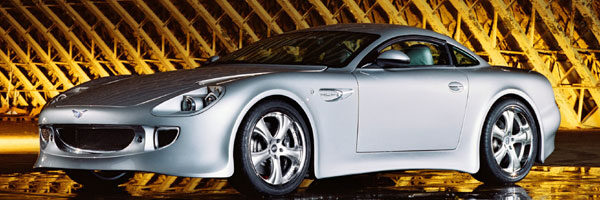
The Invicta S1 was launched in 2002 and used a carbon-composite body over a spaceframe chassis with a Ford V8 engine. Production remained very limited before the business closed in 2012.
That makes an S1 much newer than an S-Type or Black Prince, but it remains a rare specialist vehicle. A lender may look at condition, mileage, service history, accident history and comparable sales rather than using the same criteria as a mainstream sports car.
For Invicta car finance on an S1, confirm parts support and specialist servicing as part of the ownership budget.
Historic events and overseas touring need checking in advance
Many pre-war cars are bought to be used, not simply displayed. Owners may want to enter rallies, concours events, road tours or overseas gatherings.
The finance and insurance documents need to support that use. JBR Capital says its classic-car customers can use financed vehicles for drives, tours, shows and concours events, but permission is typically required before taking the car abroad, while track use can require proof of suitable insurance.
There is no universal 3,000-mile annual cap across classic-car finance. Mileage, storage and usage restrictions depend on the provider and policy.
If events form part of the ownership plan, discuss them before signing an agreement for Invicta car finance.
Auction purchases can require finance before bidding
Rare Invictas are often sold through specialist dealers or auctions rather than ordinary used-car forecourts.
Classic-car lenders can offer pre-approved auction funding or credit lines, allowing a buyer to know the available budget before bidding.
A Car Loans product may also be relevant where the buyer prefers borrowing that is not secured against the vehicle, subject to lender limits and eligibility criteria.
Compare the history as carefully as the monthly payment
A low monthly payment is of little value if the car has uncertain identity, weak documentation or restoration work that changes its worth.
Before choosing Invicta car finance, compare the deposit, APR, term, monthly repayment, fees, total amount payable and any balloon. Then look equally closely at chassis and engine numbers, coachwork history, restoration invoices, specialist inspection findings, insurance and planned event use.
What is a good car finance rate? and Car Finance FAQs provide wider guidance.
Enjoy Finance provides information about vehicle funding and may link to third-party providers. Any quote, application or agreement is supplied by the relevant third party and remains subject to its own eligibility, affordability checks and terms.
FAQs
Is there official Invicta manufacturer finance?
No current manufacturer-backed finance programme exists for the historic Invicta marque. Buyers normally use specialist classic-car lenders, independent brokers or other borrowing routes.
Can a pre-war Invicta be bought on Hire Purchase?
Potentially. Specialist classic-car lenders offer HP for historic vehicles, subject to the car’s valuation, documentation and the applicant meeting the provider’s criteria.
Can a lender finance an Invicta bought at auction?
Potentially. Some specialist providers offer auction finance or pre-approved credit lines, which can establish the available funding before bidding begins.
Does a classic Invicta need a large deposit?
There is no single required percentage. Current specialist providers publish examples starting around 10% to 15%, but the actual deposit can change with the car, loan amount and applicant.
Can I take a financed Invicta to historic events abroad?
Potentially, but check both the finance agreement and insurance. Some specialist lenders require permission before the vehicle leaves the UK, and additional insurance conditions can apply.