MAXUS is built around working vehicles rather than conventional passenger cars. Its UK range covers diesel and electric vans, electric pickups and seven-seat MIFA models, so MAXUS car finance needs to reflect payload, mileage, charging and business use as well as the monthly payment.
Enjoy Finance explains vehicle funding and links to third-party providers. We do not provide finance directly, and the website contains affiliate links.
How does MAXUS car finance work?
MAXUS dealers can arrange several funding routes, including Hire Purchase, PCP and leasing, while business users can also compare Contract Hire and other commercial structures.
The right route depends on the vehicle and the job it needs to do. A delivery fleet running fixed urban routes has a very different cost profile from a diesel DELIVER 9 travelling long distances or a MIFA 9 used for executive passenger work.
Business Contract Hire prioritises predictable rentals
Business Contract Hire uses an initial rental followed by fixed monthly rentals over an agreed term. The vehicle is returned at the end, subject to mileage and condition requirements.
This can suit businesses that want predictable vehicle costs without ownership. VAT treatment depends on the agreement, vehicle classification and business use, so an accountant or tax adviser should confirm the position.
The current 0% campaign has a 30% deposit requirement
Current MAXUS retail offers include 0% APR Representative on new vehicles registered by 30 September 2026, available through PCP and Hire Purchase.
The headline rate comes with a sizeable minimum deposit. Current retailer terms specify 30%, made up of the full VAT amount plus 10% of the total on-the-road price. PCP requires a minimum 25-month term, while HP starts from 12 months.
When comparing MAXUS car finance, look at the cash tied up at the start as well as the interest saving.
Electric van grants can matter more than the APR
MAXUS is also promoting its Green Grant on qualifying electric commercial vehicles. Eligible customers trading in a diesel LCV can receive up to £15,000 against selected electric models, including the eDELIVER 3, eDELIVER 5, eDELIVER 7, eDELIVER 9 and eTERRON 9.
The trade-in must meet the published ownership, MOT and registration rules. The stock-vehicle offer cannot be combined with every other campaign, so compare the grant and finance rate separately.
Diesel funding still has a place for high-mileage operators
The DELIVER 7 and DELIVER 9 remain available with diesel power. For fleets covering long motorway distances, towing regularly or working in areas with limited charging access, diesel can still fit the duty cycle better.
Current dealer examples include a 2.9% APR Representative DELIVER 9 offer over 60 months, although rates and deposits are campaign-specific.
For MAXUS car finance on a diesel van, compare fuel, servicing, payload and expected mileage alongside the finance cost rather than choosing purely on APR.
What is HP Car Finance? explains the ownership-focused structure in more detail.
Electric vans need a charging plan before the finance plan
The eDELIVER 5, eDELIVER 7 and eDELIVER 9 cover different payload and range requirements. The eDELIVER 7, for example, offers up to 230 miles of WLTP combined range, while the eDELIVER 9 offers up to 211 miles.
A fleet with depot charging can have a different operating cost from one relying on public rapid chargers. Before choosing MAXUS car finance for an electric van, calculate daily mileage, payload, winter range, charging access and electricity cost.
The eTERRON 9 brings electric funding into the pickup market
The eTERRON 9 is an electric pickup with up to 267 miles of WLTP combined range and a towing capacity of up to 3,500kg.
That makes it relevant to businesses that need towing or off-road capability but are considering a move away from diesel.
Its commercial tax and VAT position should be checked against current HMRC rules and the vehicle’s exact classification rather than assumed from its body style alone.
MIFA models sit closer to passenger-car finance
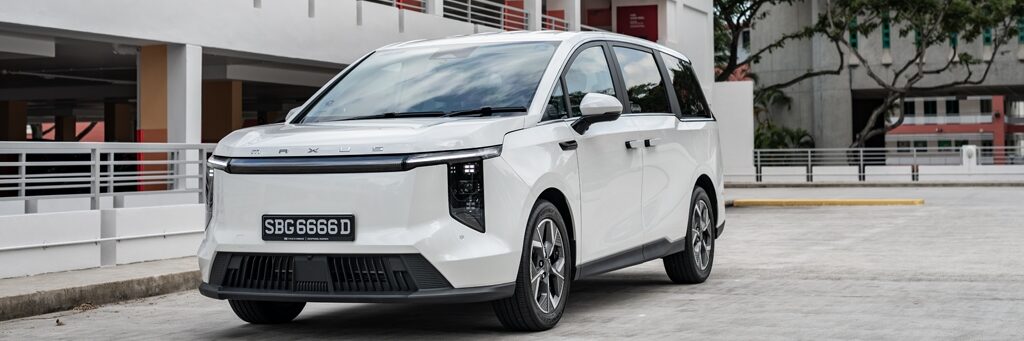
The MIFA 7 and MIFA 9 are electric seven-seat MPVs rather than cargo vans. They can suit families, executive travel companies and chauffeur businesses.
The MAXUS MIFA 9 Car Finance page gives more detail on the larger model.
For private buyers, PCP or leasing may be more relevant than a commercial van product. Business users can also look at Contract Hire, particularly where predictable replacement cycles matter.
PCP Car Deals explains how PCP works more generally.
Telematics can become part of the finance decision
Current MAXUS vehicles come with MAXUS Intelligence powered by Geotab telematics from LEVL. The system can provide information on location, driver behaviour, charging, fuel use and maintenance.
For a fleet operator, that data can help with route planning, charging schedules and downtime management during the finance term.
It does not reduce the amount financed directly, but it can change the operating-cost case for one vehicle over another.
Five years of support can match a typical fleet cycle
MAXUS currently advertises a five-year factory warranty and five years of roadside assistance across its range. Electric models also carry an eight-year high-voltage battery warranty.
A three-to-five-year finance agreement can therefore sit largely within the standard vehicle-support period, subject to the individual warranty terms.
Warranty cover does not replace servicing, tyres, brakes or other wear items, so those costs still belong in the budget.
Compare the vehicle around the work it will do
A van can look cheap on finance and still be expensive if it is the wrong size, carries too little payload or spends too much time charging.
Before choosing MAXUS car finance, compare the deposit or initial rental, APR, term, monthly payments, total amount payable, mileage rules and any final payment. Then add fuel or electricity, insurance, servicing, downtime and likely payload.
What are the different types of car finance?, Car Loans and Car Finance FAQs provide wider guidance.
Enjoy Finance provides information about vehicle funding and may link to third-party providers. Any quote, application or agreement is supplied by the relevant third party and remains subject to its own eligibility, affordability checks and terms.
FAQs
Does MAXUS currently offer 0% finance?
Yes. Current retailer campaigns advertise 0% APR Representative on qualifying new MAXUS vehicles registered by 30 September 2026, with a 30% minimum deposit and other product conditions.
Is Business Contract Hire available for MAXUS vans?
Yes. Business leasing and Contract Hire are widely available through MAXUS dealers and leasing providers. Terms, mileage allowances and initial rentals vary by vehicle and provider.
Can I get MAXUS car finance on an electric van?
Yes. Electric models such as the eDELIVER 5, eDELIVER 7 and eDELIVER 9 can be funded through several routes, subject to the provider’s criteria and the live campaign terms.
What is the MAXUS Green Grant?
It is a trade-in incentive worth up to £15,000 on qualifying electric MAXUS commercial vehicles when an eligible diesel LCV is exchanged. Published eligibility conditions apply.
What warranty comes with a new MAXUS?
MAXUS currently advertises a five-year factory warranty and five years of roadside assistance. Electric models also receive an eight-year high-voltage battery warranty, subject to the vehicle’s warranty terms.